Moore On Health would like to wish you a healthy and warm season’s greetings!

Here are some quick ways to help you fight the holiday stress.
SeasonsGreetings

1. Hike/Run/or Walk your mood with sunlight…try to stay outdoors during the day

It stimulates the production of feel-good serotonin and also helps relieve seasonal affective disorder (SAD) which impacts millions of Americans every year, says Judith Orloff, MD, an assistant professor of psychiatry at the University of California, Los Angeles.

2. Stick with your daily routine

We try to place more on the “to-do list” when the holidays comes rolling around.  Prioritize your workouts, book club, etc., and don’t try to squeeze in more holiday than you can handle, says Katherine Muller, PsyD, an assistant professor of psychology at the Albert Einstein College of Medicine in New York City.

3. Savor a spicy meal

Hot foods trigger the release of endorphins—the natural chemicals that trigger feelings of euphoria and well-being, Dr. Kulze says.

4. Dip into some honey…preferably Raw Honey

You’ll get an instant kick and energy for the long haul. Plus, research shows that its antioxidant and antibacterial properties may improve your immunity. Here’s a tip: The darker the honey, the more powerful the antioxidant punch.
Sept Sickle Cell Awareness page 1

Sickle Cell Awareness Month

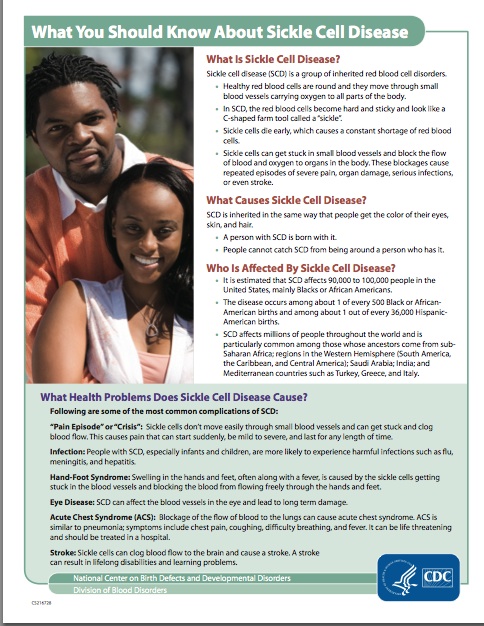
September marks National Sickle Cell Disease Awareness month. With approximately 72,000 Americans living with Sickle Cell Disease (SCD), and an estimated two million, including 1 in 12 African Americans carrying the genetic trait for the disease, SCD represents the most commonly inherited blood disorder in this country.

September is the Cholesterol Education Month 

According to the CDC, “Too much cholesterol in the blood is one of the main risk factors for heart disease and stroke—two leading causes of death in the United States. One way to prevent these diseases is to detect high cholesterol and treat it when it is found.

What is cholesterol?

Cholesterol is a waxy, fat-like substance that your body needs. But when you have too much in your blood, it can build up on the walls of your arteries and form blockages.

This can lead to heart disease, heart attack, and stroke.

There are two kinds of cholesterol:

high-density lipoprotein (HDL) and

low-density lipoprotein (LDL).

HDL is also called “good” cholesterol. LDL is called “bad” cholesterol.

When we talk about high cholesterol, we are talking about “bad” LDL cholesterol.

What should you do?

Screen, Screen and Screen

Screening is the key to detecting high cholesterol. Because high cholesterol does not have symptoms, many people do not know that their cholesterol is too high. Your doctor can do a simple blood test to check your cholesterol level.

According to the CDC, if you have high cholesterol, what can you do to lower it?

Your doctor may prescribe medications to treat your high cholesterol. In addition, you can lower your cholesterol levels through lifestyle changes:

  • Low-fat and high-fiber food (Eat more fresh fruits, fresh vegetables, and whole grains).
  • For adults, getting at least 2 hours and 30 minutes of moderate or 1 hour and 15 minutes of vigorous physical activity a week. For those aged 6-17, getting 1 hour or more of physical activity each day.
  • Maintain a healthy weight.
  • Don’t smoke or quit if you smoke. 

The following chart shows optimal lipid levels for adults


Desirable Cholesterol Levels

Total cholesterol

Less than 170 mg/dL

Low LDL (“bad”) cholesterol

Less than 110 mg/dL

High HDL (“good”) cholesterol

35 mg/dL or higher

Triglycerides

Less than 150 mg/dL

Thank you for visiting Moore On Health!

Source:

http://www.cdc.gov/features/cholesterolawareness/